
Introduction
Steel Industry in India is growing and evolving faster than ever, driven by need for lower costs, stricter emission norms, and the constant demand for better-quality. At the centre of every steel plant is the Reheating Furnace which quietly determines the energy consumption of the plant and the quality of the final product. In order to be able to meet all these demands, steel makers need to adapt innovative solution. This is where the combination of Walking Beam Reheating Furnaces and modern Coal Gasification together offer a practical, reliable and cleaner alternative to traditional fuels, while ensuring consistent and high-quality reheating.
Role of Reheating Furnaces
Reheating furnaces play a crucial role in the steel industry by heating the semi-finished steel products such as billets, blooms, and slabs to the required rolling or forging temperature. Reheating furnaces ensure that semi-finished raw steel materials reach the ideal temperature for deformation during rolling or forging. We must note that before these products can be rolled into final shapes, they must be reheated to precise temperatures — typically between 1,100°C and 1,250°C. This proper reheating directly affects the metallurgical properties, surface quality, and mechanical strength of the final steel rolled or forged product.
Hence, furnace design and performance have a direct impact on Quality, Productivity, Energy consumption, production cost and overall plant efficiency.
There are many types of reheating furnaces based on the configuration. The some of the important variables that define the furnace are
| Variable / Parameter | Types / Options |
|---|---|
| Fuel | PCI / NG / LPG / Coal Gas / BF - Coke Oven Gas / Furnace Oil |
| RM Movement | Pusher / Walking Hearth / Walking beam / Chamber / Bogie |
| RM In / Out | Side In - out / Pusher - Ejector / Drop |
| Shape | Floor / Top & Bottom / Neck |
| Burner configuration | Side & front / Side Top & Bottom / Roof |
| Heat Recovery | Recuperative / Regenerative |
Why Walking Beam
In the competitive world of steel manufacturing, efficiency, product quality, and operational reliability are the cornerstones of success. The traditional reheating furnaces suffer from problems of uneven heating of the steel, high fuel consumption, and increased oxidation losses. The Walking Beam Reheating Furnace stands out as a modern, high-performance solution designed for uniform heating, improved efficiency, and superior product quality.
Its innovative design not only ensures superior heating performance but also addresses the limitations of older furnace such as pusher.
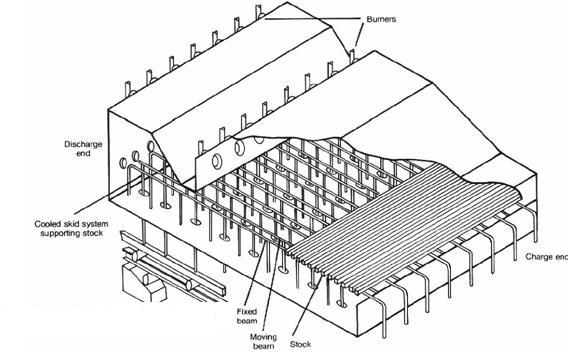

Uniform heating
The most important and unique feature of walking beam design is the uniformity of heating across length and cross section of the material. The mechanism is designed to lift and moves the steel material step by step through the furnace. This motion ensures each billet, bloom, or slab is evenly heated on all sides, with no skid marks, maintaining consistent temperature distribution. Uniform heating minimizes internal stresses and prevents temperature-related defects, ensuring superior metallurgical quality and improved surface finish.
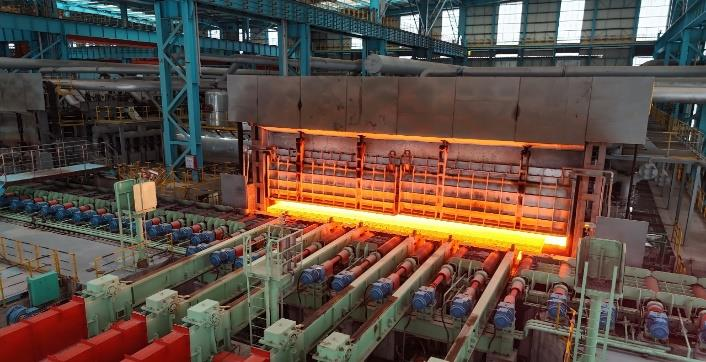
Flexibility
The Walking Beam Furnaces are suitable for a wide range of steel grades and product dimensions. Whether reheating long products, slabs, or blooms, the furnace can adapt to different production needs. The flexible control of heating zones and temperature profiles allows operators to fine-tune the process according to specific steel grades—making it equally effective for all steel grades hearting including speciality steel, Mild Steel and Stainless-Steel material reheating in the same furnace.
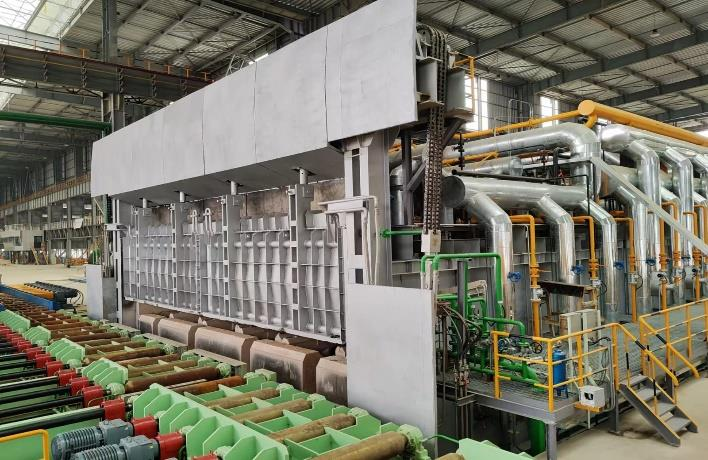
High efficiency
Walking Beam Reheating Furnaces are designed for optimal thermal performance. They utilize advanced combustion systems, waste heat recovery units, and efficient insulation to minimize energy loss. Th oxidation losses in the operation of the furnace are minimum. The combination of regenerative or recuperative burners significantly reduces fuel consumption, leading to lower operating costs and improved energy efficiency. This high thermal efficiency contributes directly to sustainable and cost-effective steel production.
Low maintenance
The mechanical components of a walking beam system operate smoothly with minimal friction. Because the steel is lifted rather than pushed, wear and tear on the furnace hearth are greatly reduced. This leads to lower maintenance costs, less downtime, and extended equipment life. The possibility of billet / Slab rotation or movement is minimum. The design also allows easy access for inspection and servicing, enhancing reliability and productivity.
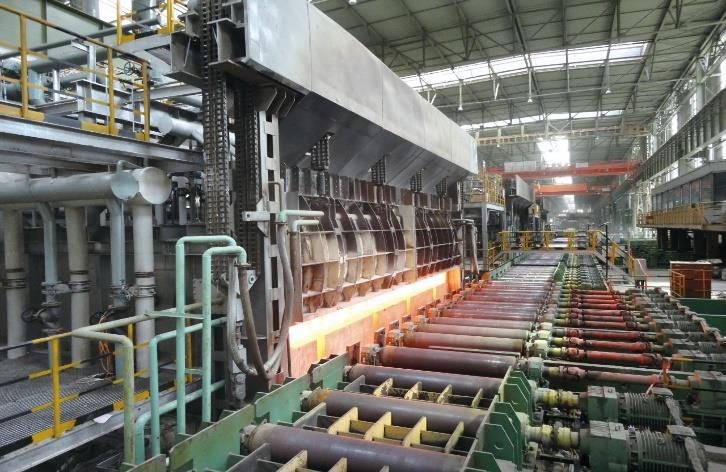
Key Considerations for SS Steel production
For stainless steel, precise temperature control and a clean heating environment are essential. The walking beam design prevents surface scratching and oxidation, ensuring high-quality SS billets and bars with excellent surface finish and mechanical properties. The accurate flame length and consistent temperature control across all furnace zones is critical. Managing the furnace atmosphere is especially important in stainless steel reheating. Controlled oxygen levels prevent scaling and surface oxidation, maintaining the cleanliness and quality of the steel surface.
Integration of coal gasifier with walking beam CADRE – RHF POWERHOUSE Reheating Furnace
In today’s steel industry, the focus is steadily shifting toward sustainable and cost-effective energy solutions. One of the most innovative advancements in this the usage of Clean and Cold Coal Gas which can be generated from the local Indian coal. The important step in the development of same in India is the integration of a Coal Gasification with the Walking Beam Reheating Furnace. This combination not only improves the overall thermal efficiency of steel reheating operations but also
significantly reduces fuel costs and environmental emissions.
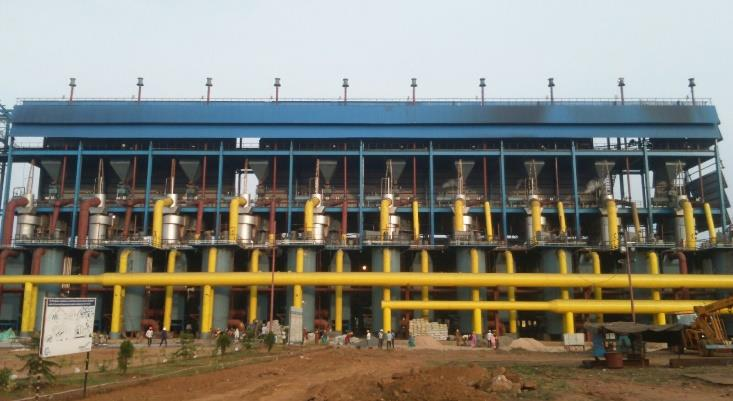
A coal gasifier converts solid coal into coal gas, a mixture of carbon monoxide (CO), hydrogen (H₂), and methane (CH₄), which is then cleaned of the impurities like tar, dust and sulphur. The resulting gas contains fewer particulates, lower sulphur content, and reduced greenhouse gases. The clean gas burns more efficiently and cleanly compared to other fuels. When used as a fuel for reheating furnaces, this gas ensures better combustion control, uniform heat distribution, and reduced fuel wastage. The result is lower energy consumption per ton of steel produced and improved operational consistency across the furnace zones.
Coal gas has a lower carbon intensity than solid coal combustion, which translates to reduced CO₂ and particulate emissions. Additionally, the controlled combustion process produces less smoke, dust, and unburned carbon, helping the steel plant meet stricter environmental regulations. This integrated system also minimizes the formation of scale and oxidation on steel surfaces, improving product quality while maintaining cleaner furnace conditions.
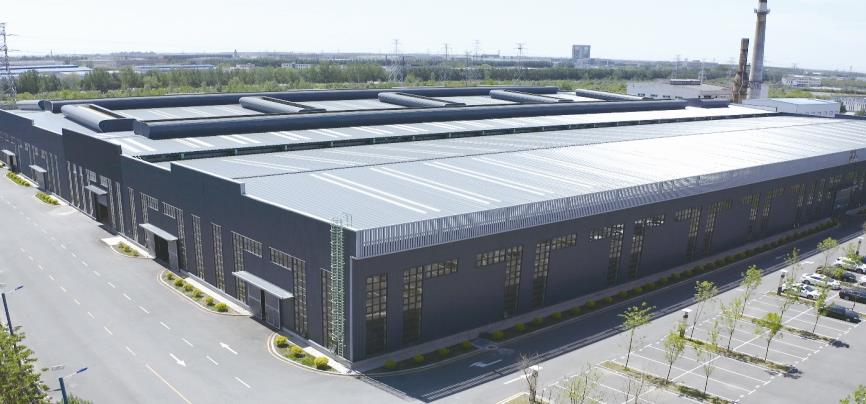
Founded in 2000, Shanghai Cadre Industrial Furnace Co., Ltd. (CADRE) is a leading enterprise specializing in EPC for metallurgical industry furnaces and kilns. With five R&D and engineering centres located in Shanghai, Beijing, Shenyang, and Anshan, and three manufacturing bases in Anshan, CADRE employs nearly 300 professional R&D engineers and 300 skilled technical workers. The company’s integrated capabilities span design, equipment manufacturing, project management, and on-site construction.
Over the past 25 years, CADRE has successfully executed more than 1,000 projects across China and overseas, maintaining a 100% success rate. The company holds multiple national patents, has received provincial and ministerial-level science and technology awards, and is recognized as a National High-Tech Enterprise. With the largest industrial furnace manufacturing facility in China, CADRE can produce up to four to five complete walking beam furnaces per month, ensuring strict quality and delivery standards.
CADRE pioneered dual-regenerative combustion technology for low-calorific-value gas and single-regenerative technology for high-calorific-value gas, achieving industry-leading energy efficiency and ultra-low NOx emissions. CADRE operates advanced industrial experimental platforms and continuously develops next-generation technologies such as low-NOx burners, full-oxygen combustion, and modular furnace construction methods. The company holds essential qualifications for metallurgical design and construction, along with ISO 9001, ISO 14001, and ISO 45001 certifications, ensuring compliance with global standards of quality, safety, and environmental management.
DEV ENERGY – COAL GASIFICATION
DEV ENERGY is the hub for innovation and since 2001 we have been implementing solutions for efficiency and productivity enhancement in the steel, glass, aluminium and ceramic industries with over 300 systems operating successfully saving crores for our users. We pride ourselves on providing complete tailor-made turnkey solutions.
We have 24 years of experience in the domain of Coal Gasification and have undertaken most of India’s first projects for Coal Gas generation. The system, processes and the equipment are designed and engineered by experienced and professional engineer from India and China.
Technology Advantages
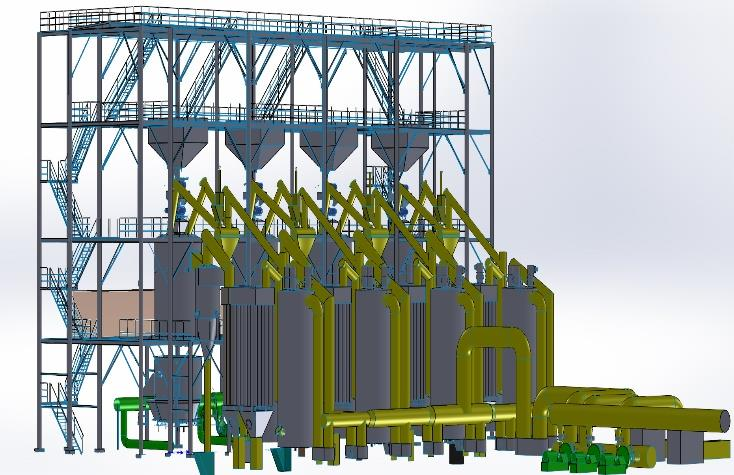
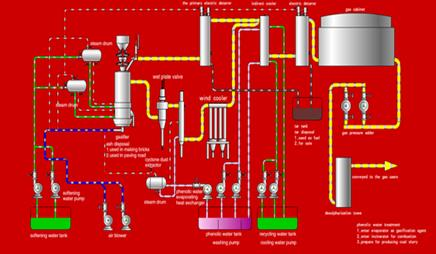
The heart of the technology is the double stage gasification process where the Volatiles in the coal are separated in the Upstage reactor and the fixed carbon in coal is converted into the carbonised gas. The purification process uses seven stages of cleaning and cooling of gas with three stages of closed cycle indirect cooling including air cooler and indirect water cooler are used to cool the gas. The two stages of electrostatics precipitation are used to clean the gas of tar. Dust is removed by cyclone. The seventh stage of sulphur removal is done using desulphurisation tower.
The need for water scrubbing is eliminated and all cooling is done without direct contact with water. This eliminates generation fresh water in to phenolic water. A specially designed heat exchanger is used to vaporise the condensate moisture and phenols which are injected back to the gasifier. This technology of reusing the phenolic water helps save energy and uses the phenolic water back in to the system. The technology complies with the norms of pollution control board. The system is designed for 100% water and steam reuse and no water of any type is discharged outside the system limit making it a zero-discharge system.
The tar produced by the process of dry electrostatic precipitation is at low temperature and free of moisture. This tar is a high-quality tar with CV > 8500 Kcal / Kg.
Process Flow Diagram
The technology because of its non-contact nature making it much safer to operate. It is also very user friendly for and provides consistent performance. The automation helps to continuously monitor the quality and quantity of gas which feed the Algorithmic based programming to increases the overall efficiency of the system.
The safety of the system is ensured with a combination of fast cut off valves with high-speed vents for gas release and a highly responsive signal interlocking system programmed into the PLC system.
The clean gas improves the life of the furnaces and the burning systems.
Walking Beam Reheating Furnaces integrated with Clean Coal Gasification is a solution that bring together everything steel producers need today — a lower fuel bill, better control on heating, reduced emissions, and a stable, predictable operation. The system makes it easier for steel plants to deliver high-quality steel at lower costs while meeting sustainability goals. As India’s steel industry prepares for a new phase of growth, this combination offers a clear, future-ready solution. With a strong foundation in engineering and proven gasification expertise, DEV ENERGY is proud to support this transition and help steelmakers move confidently toward cleaner and more efficient production.
