
Introduction
Steel Scrap plays a pivotal role in today’s steel making and has become the most critical raw materials in modern steel melt shops. In the world moving towards green future, there is an increasing emphasis the recycling of steel. The usage of steel scrap helps in reduction of the net carbon footprint of steel produced. The strategic use of scrap has transformed steel plants from being purely ore-based operations to circular, resource-efficient facilities. Whether it is in an Electric Arc Furnace (EAF) or in an Induction Furnace (IF) the scrap quality directly influences the productivity, metallurgy and environmental performance of the steel melt shop.
In Africa, for decades there existed a unique situation where the steel scrap was available in abundance due to the availability of war scrap and absence of steel making plants. The scrap was not used or processed and therefore available at cheap prices. The abundance did not immediately transform the industry into large scale scrap recycling-based steel melting production because of lack of any local government support or investors ready to take the opportunity. In recent years, the scenario changed completely and almost all countries have banned the export of steel scrap. All local governments have pushed investors to setup scrap recycling-based steel plants.
Initially, the abundant scrap availability and low prices resulted in steel melting practices where neither technology nor cost was considered, and only goal was to produce hot metal anyhow. Since 2022, due to the surge in steel demand and uptick in the prices of steel the industry has taken a second phase of investments and the companies are upgrading and upscaling their facilities. The maturing of markets has resulted in the newer plants shifting their focus on cost optimization, energy efficiency, and sustainability. The essential step in this exercise is to work on management of the Steel scrap with addition of the Scrap processing facilities.
Challenges of Scrap Processing in Africa
The available steel scrap in Africa is in very bad shape and form. The shapes, sizes and quality are varied and this deteriorated scrap quality has necessitated the preparation of scrap into usable scrap. This is done through scrap processing machines for achieving better efficiencies in steel melting furnaces.
The concept of Scrap processing is to undertake the following processes to achieve the desired goals.
Sort -> Process -> Clean
The goal of the processing is to get the final scrap which is
- Sorted
- Sized
- Dense
- Clean – dust free
- Segregated
The processing of scrap can be achieved through three basic process methodologies which are shredding, shearing and baling. The suitable solution for any plant is to process the scrap in the proper parameters using machinery matching the type of scrap. The process identification depends on the type of Raw Steel Scrap, its density, its size, its cleanliness level, the size of the furnace, power density of the furnace etc. There are various types and size of machines available to process scrap from 01 to 100 t/hr.


Advantages of Scrap Processing
The processed scrap is sized, denser and cleaner for faster charging in the furnace. This processed scrap consumes less power per ton of steel produced, results in high productivity for the furnace. Power is the major cost in making steel. The scrap shape, density and size are the variables that determine the time required for melting. The input scrap that is improper results in longer time for melting and higher power consumption. Dev Energy has been actively working on reduction of power with its dynamics and interrelation to scrap processing.
| Unprocessed Scrap | Processed Scrap | |
|---|---|---|
| Size | Irregular | Uniform |
| Density | Low to medium | High |
| Melting | Slow & Uneven | Fast & consistent |
| Risk | Bridging | none |
| Power Used | ~ 750 kWh/ton | ~ 650 kWh/ton |
| Yield | 90 – 92% | 94 – 96% |
| Slag Volume | High | Low |
Dev Energy has developed expertise to provide innovative turnkey solution for efficient scrap segregation, processing and feeding in the furnace. This feeding system also has to be integrated with the pollution or Flue control system generated during melting. Our scrap solutions can be tailored to plant needs and help melting shop manage any type of input scrap; while increasing scrap value and employee safety through efficient of scrap handling. Our systems not only make scrap easier to manage, then low-cost operations reduce waste thus lowering the total cost and providing immense value to the company.
Case Study on 1000 tons / day Scrap Processing Solution in West Africa
In an era where operational efficiency defines competitiveness, a 1000 TPD induction furnace-based steel plant offers a compelling example of how smart scrap preparation can unlock measurable performance gains. Struggling with inconsistent charge material, prolonged heat cycles, and rising energy costs, the West Africa steel plant took a decisive step by inviting Dev Energy to propose and then supply the complete integrated Steel Scrap processing system.
Prior to transformation, the plant had negligible scrap processing and the unprocessed scrap handling and charging practices posed significant operational challenges that directly impacted furnace performance and overall cost efficiency. The resulting low furnace productivity driven by inconsistent scrap size and density resulted in unstable melting behaviour and prolonged heat cycles. This inefficiency was further compounded by higher power consumption as the furnace was required to compensate for dirty poor scrap and energy absorption by huge amount of slag.
In addition to above, the plant experienced notable metallic yield deterioration due to excessive oxidation and higher slag generation. Increased slag volumes also accelerated refractory wear, leading to frequent repairs and shortened lining life. Safety risks were also elevated, particularly during manual scrap handling and charging operations, while inconsistent scrap chemistry made it difficult to achieve stable steel compositions, increasing the need for corrective additions.
These technical shortcomings translated into higher maintenance requirements, unplanned downtime, and increased operating interruptions, all of which adversely affected production reliability. The heat times were extended to approximately 150 minutes per cycle, and despite the installed furnace capacity of more than 1000 tpd, the daily production remained capped at around 650 tpd.
As the first step to the designing the integrated solution, Dev Energy studied Scrap-Mix composition in terms of type of scrap, its size, density and dust levels. The plant’s input scrap was noted to be highly variable scrap mix, which created significant challenges in suggesting a consistent solution.
The scrap charge was composed of ~ 5 % HMS 1 and 20 % HMS 2, proving a limited availability of heavy, dense scrap. A substantial portion of the mix consisted of light scrap ~ 30 %. The remaining 45% comprised locally sourced unsegregated mixed scrap characterized by wide variations in size, density, quality, contamination levels and chemistry.
Solution
A detailed assessment revealed several critical pain points in this scrap mix that the plant was procuring. The average bulk density of the scrap remained low, in the range of 0.3 – 0.4 T/m. Dev Energy team mapped the scrap to the machines that can process the scrap without segregation.
BOX SHEAR 1250 TONS – FOR – HMS 1 & HMS 2
LARGE BALER 400 TON – FOR – LIGHT SCRAP
SHREDDER 1500 HP – FOR – LOCAL MIX SCRAP
Box Shear – 1250 Tons
It was identified that the input scrap HMS 1 & 2 is sourced and transported into plant in trucks which could be unloaded at one location. We proposed a Box Shear machine and calculated machine capacity of ~ 400 tpd output.
The machine is ideal for all variety of Scraps. It has the capacity for three sides of compression and additional gate side pressing & clamping. Then the desired density of scrap increased by 5 times. Finally, the Shearing blade shears the scrap into pieces of length < 350 mm with force of 1250 tons.
Shear force : 1250 tons
Capacity : 25 – 30 tph
Operation Expense : ≤ INR 200 / t
Output Density : 1.0 – 1.2 T/m³
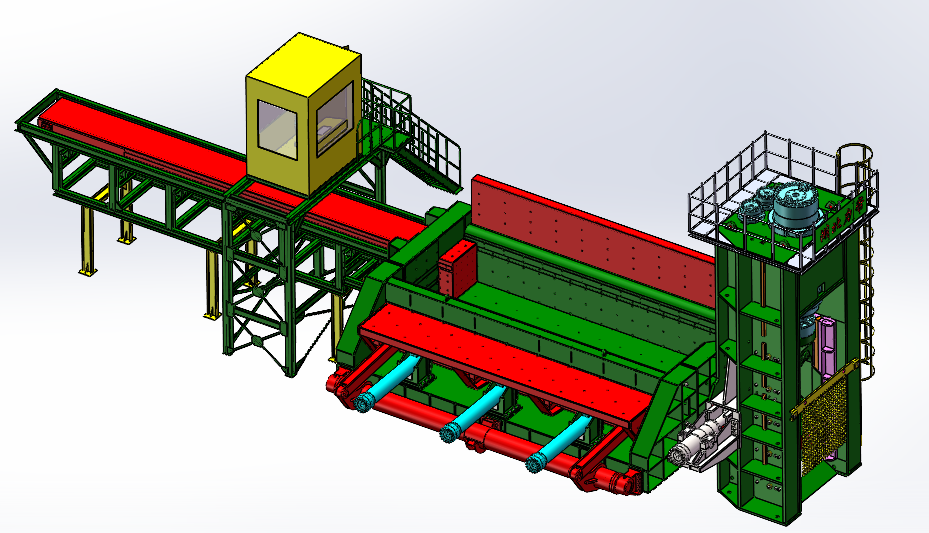
The machine installed is attached with a Dust Separation system integrated with magnetic separator and screening which will segregate the dust, mud, rubber, plastics and non-ferrous contaminants form the processed scrap.
Large Baler – 400 Ton
It was decided that the super light Input scrap with plate of thickness < 0.3 mm like CR punching and turning needs Baling as the same is not suitable for shearing and shredding. The estimated quantity was ~ 200 tpd and we proposed Large 3 side compression Balers.
The proposed balers will transform the light scrap into dense, consistent bales. The size of the box was taken as large with size as 3.0 m x 3.5 m and the final force of compression was 400 tons. These bales have to feed into the induction furnace so the dimensions of bales were decided as 600 mm x 600 mm x 600 mm.
Main force : 400 tons
Bale Weight : 700 – 800 kg
Bale Size : 600 x 600 x 600 mm
Bale Density : 1.8–2.2 T/m³
Operation Expanse : ≤ INR 125 / t
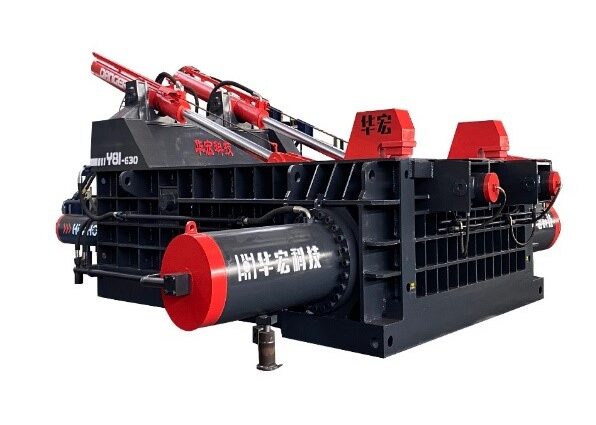
The machine installed has three sides compression, automatic PLC control, Cycle time less than 120 sec and has fully hydraulic driven operation. The main operational flexibility is for exiting the bale through Centre / Side FLIP out
Scrap Shredder- 1500 Hp
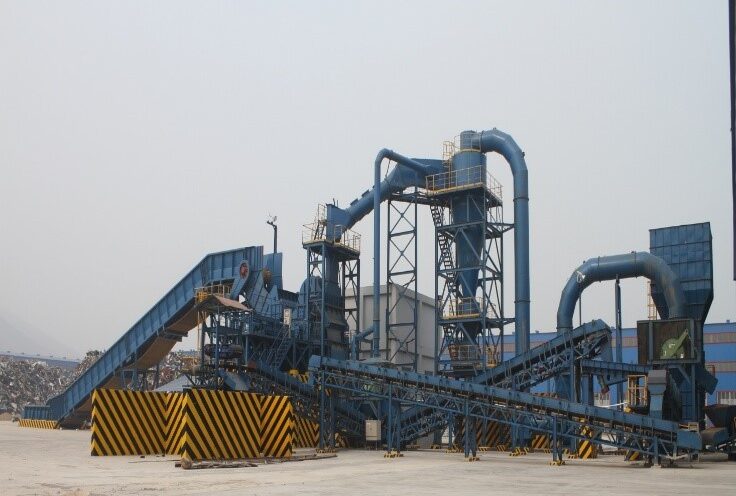
It was identified that the major input is the local mixed scrap which is sourced from multiple places and cannot be segregated. The shredder with Hammer Mill with capacity of ~ 500 tpd output was proposed.
The complete shredding line was installed with multiple stages of scrap cleaning and the machine brought a quantum leap in cleanliness and uniformity.
Output Density : ~ 1.6 – 2.0 ton/m²
Output Size : < 90 mm
Metal Recovery : ≥ 99%
Operation Expense : ~ INR 650 / t
The system was installed with the following optional add-ons
Sound Proof Enclosure
2nd Magnetic Separator
Blue Smoke Inhibitor
Video monitoring
Manual Shorting Station
Bag House De-Dusting system
Z Box Air-cleaning system
Non-Ferrous Segregation
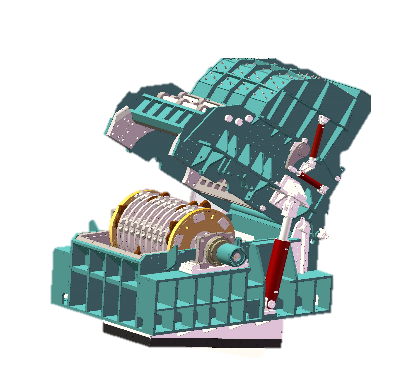
The final output dense clean and was free of dirt & impurities.
Operational Impact
The operational impact was immediate and quantifiable. Scrap processing equipment provided the melting furnaces with uniform scrap density and cleaner scrap creating a predictable and controllable charge composition. The heat times were reduced by nearly 20 % allowing faster induction furnace turnaround and increase in the throughput by 20%. The power consumption dropped sharply delivering savings of up to 40 kWh per ton of liquid steel. The metallic recovery was observed to be much better with 1.0 – 1.5% increase in yield. The steel melt shop was cleaned and safer as fumes were less and the incidence of bridging almost disappeared.
Financial Impact
The financial outcomes of the project were nothing short of remarkable. The project has stood out for its strong business case as the entire investment achieved payback in less than six months, reinforcing the strategic value of upstream scrap processing.
A modest ~ 1% improvement in metallic yield, at an approximate scrap cost of ~ ₹32,000 per to translated into ~ ₹ 8.0 crore per annum savings. The power consumption gains delivered even greater value with a reduction of ~ 30 kWh per ton at a power cost of ~ ₹7 per kWh resulted in nearly ₹45.0 crore per annum savings. The additional benefits arising from the reduction of the maintenance time, lower refractory consumption in furnaces and lesser accidents contributed a further ~ ₹5.0 crore annually.
Collectively, these improvements generated total annual savings in the range of ~ ₹ 50 – 60 crores against a relatively modest capital investment of approximately ₹40 crore. The result was an exceptional payback period less than 8 months which is a level of return rarely seen in steel plant modernization initiatives, firmly establishing integrated scrap processing as a high-impact, high-confidence investment.
This case underscores a broader industry lesson that the scrap is no longer just a raw material but a lever of performance which when used intelligently becomes a decisive factor in energy efficiency, yield optimization, and sustainable steelmaking. The proper selection and use of Scrap processing Machines can transform the economic viability and operational excellence of the scrap-based steel plant.
Dev Energy reaffirms its commitment to provide innovative solutions for the specific engineering-based solution designed to the specific need of the steel plants. The solutions are turnkey, reliable and cost effective making the user trust the outcome.
