
THE BIG PICTURE — WHY COAL GASIFICATION?
The Indian Industrial landscape is undergoing its most consequential energy transition in a century. There is huge shift of usage of conventional fossil fuels like Natural Gas, LPG, Propane or Furnace Oil to the usage of abundantly available coal in India. This conversion is happening through proven commercial scale available technological options on End application by using Coal Gasification route to create Coal Gas suitable as fuel. This offers the user long-term energy security along with economic benefits of de-risking the user from the fuel availability & price volatility shocks. This has created a once-in-a-generation window in India to fundamentally transform how India and the world produce steel, aluminium, ceramics, glass, chemicals and derivatives of same.
At the centre of this transformation sits a technology that is mature, commercially deployed, domestically adaptable, and strategically decisive: Coal Gasification. By converting India’s abundant coal reserves into a clean, high-quality Coal Gas coal gasification technology enables economic competitiveness of India’s most important industrial sectors without dependence on expensive, import-constrained Piped or Liquified Natural Gas, Liquified Petroleum Gas (LPG) and Furnace Oil.
PROGRESSIVE DEVELOPMENT - TECHNOLOGY
Coal emerging as the main INDUSTRIAL FUEL source in India has witnessed a journey from pilot to commercial scale applications in last two decades. The initial usage of Fixed Bed technologies has yielded huge benefits to Industry. Now, the latest Circulating Fluidised Bed Gasification technologies which having globally established itself is ripe for yielding benefits in India.
CORE COAL GASIFICATION TECHNOLOGIES
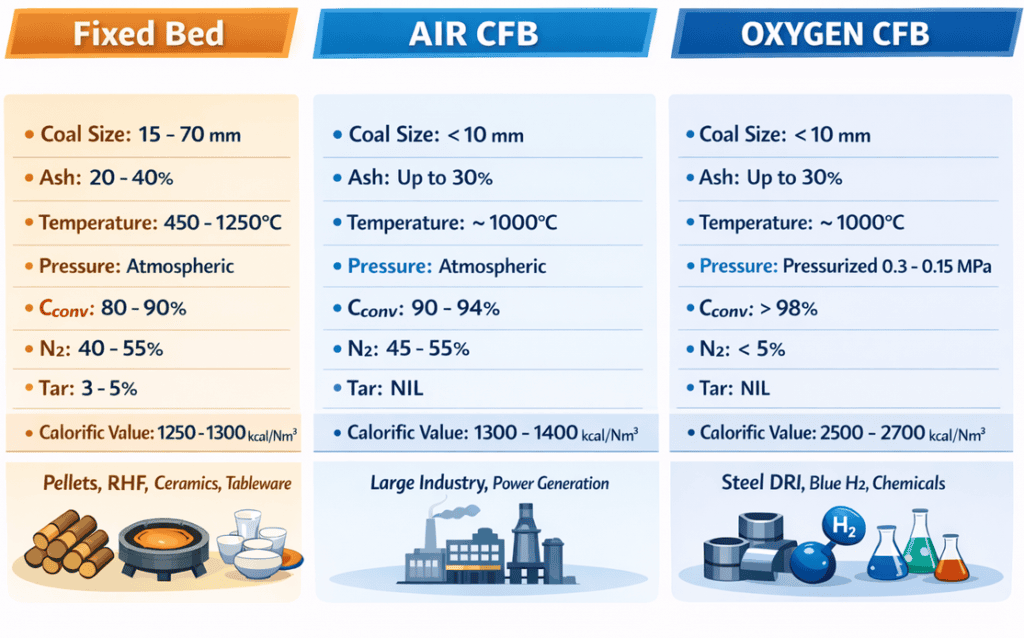
Coal Gasification at atmospheric pressure and with air as reagent is proven as the most technically suitable for generation of gas usable as fuel across all industries in India and Globally. Dev Energy, since 2003, has been pioneer inintroduction by of this technology in India in various industrial applications having cumulatively converted Indian coal over ~ 50 million tons into usable Coal gas as fuel.
MULTIPLE INDUSTRIES - APPLICATIONS
The Coal Gas generated from Indian coal which is then cleaned and cooled to be used as FUEL gas is used as a direct substitute to expensive, import-constrained Piped or Liquified Natural Gas, Liquified Petroleum Gas (LPG) and Furnace Oil in multiple industry segments.
Steel Industry – Iron ore pelletisation Kilns with all three designs – Straight grate, Rotary Kiln and Circular Kiln need fuel to fire pellets at 1250 °C successfully replaced by Coal Gas
Steel Industry – Tunnel Furnaces for Slab Rolling mills need fuel for heating thin slabs to 1200°C successfully replaced propane by Coal Gas
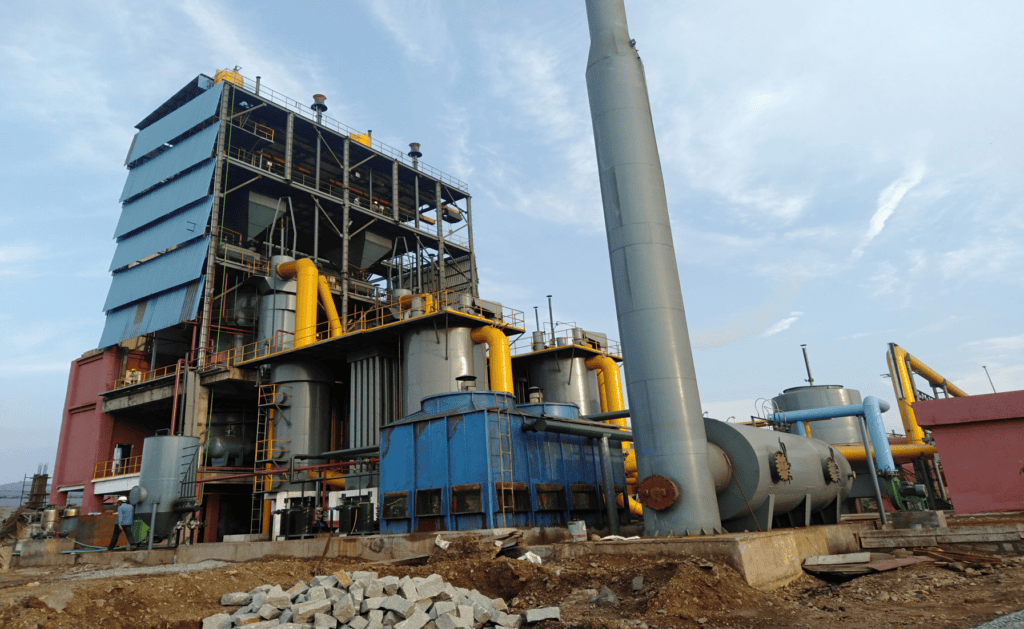
Steel Industry – Reheating Furnaces for Rolling mills to producing long or flat steel need fuel for heating steel successfully using Coal Gas

Steel Industry – Stainless steel hot and cold rolling mill furnaces need a steady, controllable flame at 1050 °C successfully replaced LNG by Coal Gas
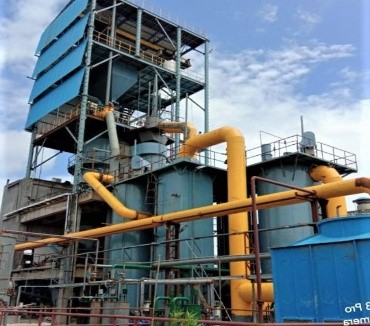
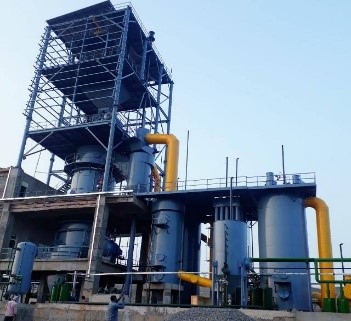
Refractory Industry – Tunnel kilns needed fuel to bake the refractory bricks successfully used Coal Gas
Ceramics Industry – Tiles and Tableware sector including Wall and floor tiles, bone China, sanitaryware and insulators kilns demand clean fuel and uniform firing successfully replaced LNG by Coal Gas
Glass Industry – horse shoe regenerative kilns need temperatures up to 1700 °C successfully operated with Coal Gas.
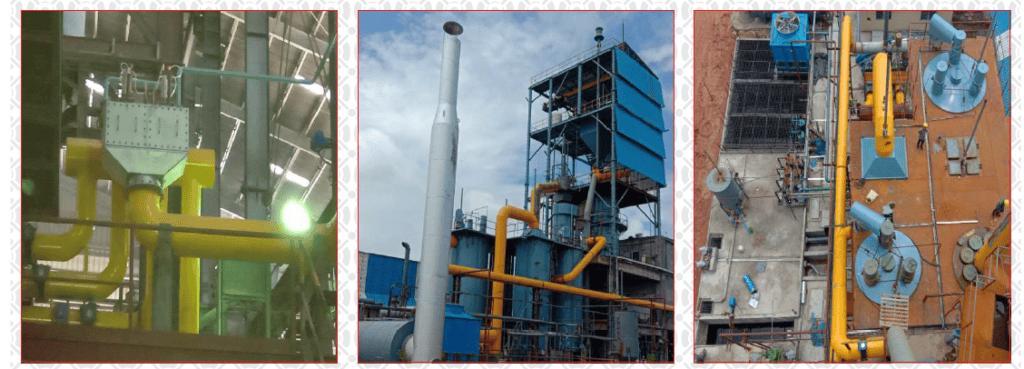
Alumina Industry – Calciners rotary kilns or flash calciners operating at 1100°C operating on Coal Gas.
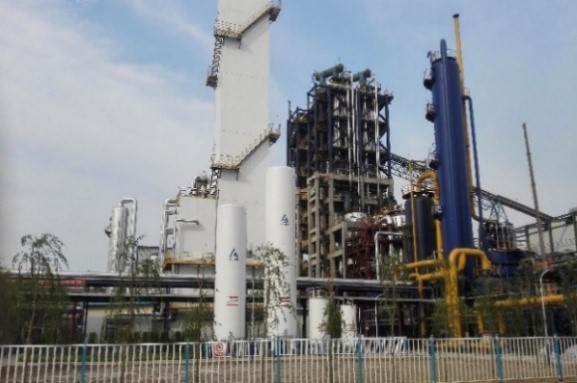
Dev Energy has in last 24 years completed projects successfully in above industries providing end user with exceptional economic advantage.
FIXED BED TECHNOLOGY – PROVEN & PRACTICAL
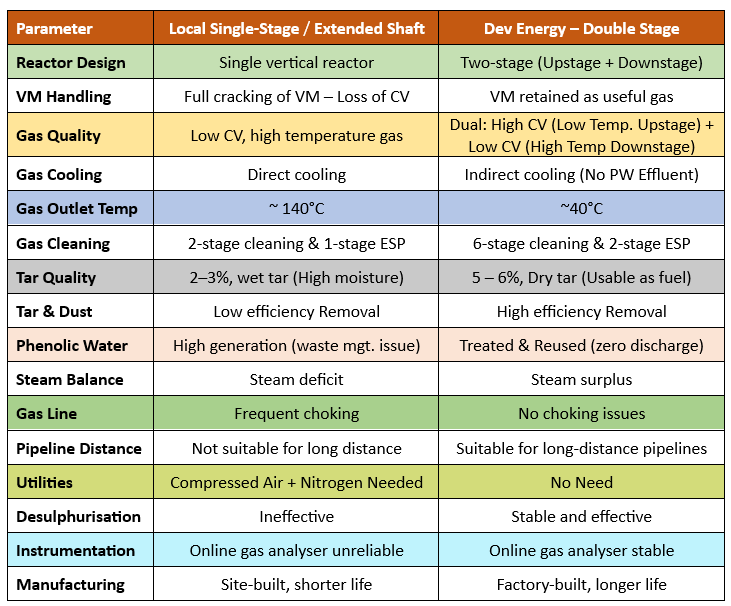
Dev Energy has developed and matured most energy Efficient and environmentally suitable solution in form of Double Stage Clean and Cold Gas technology.

KEY FEATURES:
Upstage gas -> Volatile Matter Extraction
At low temperature with CV > 1750 kcal / Nm3
Downstage gas -> Carbonised gas generation
At high temperature with CV > 1250 kcal / Nm3
The advantage of Double stage gasification is that the down stage gas being tar free can be treated in the
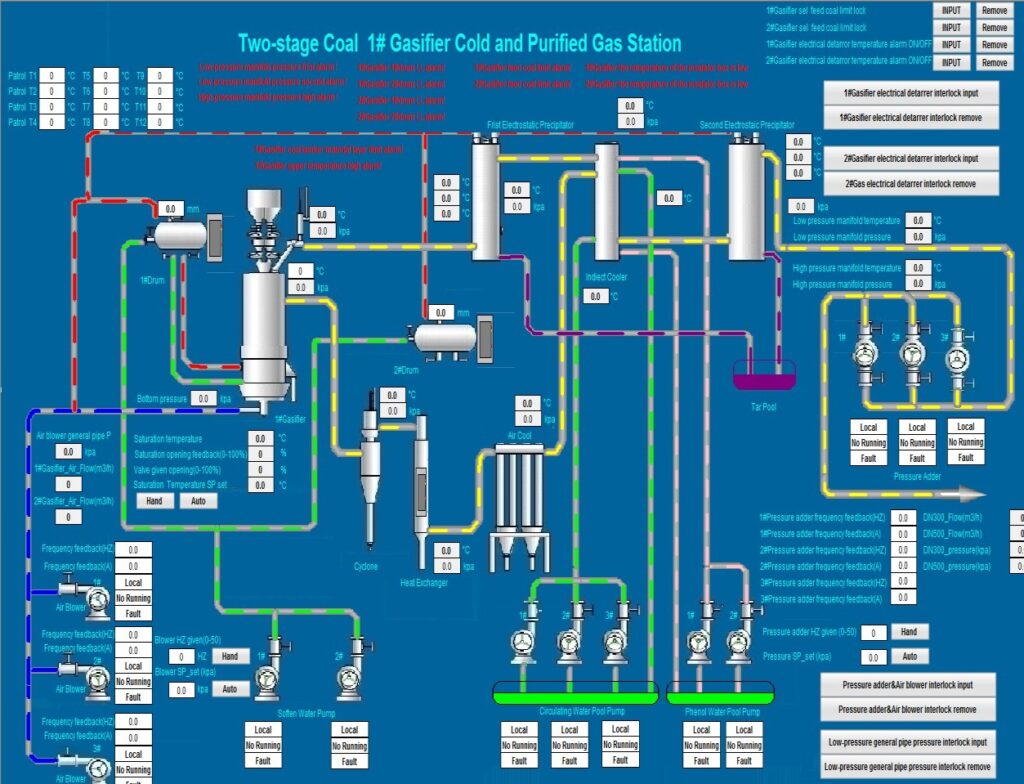
cyclone to remove the dust particles, then cooled through Heat exchanger and an Air cooler. The upstage gas being at cooler goes directly into ESP – Detarrer to remove tar. These Upstage and downstage gases are then mixed in indirect cooler and cooled to 45 °C. Then the final gas pass through ESP – Deoiler. The coal gas is DE-sulphurised and pressurised to the desired pressure and then transmitted to end user.
The Tar generated is clean and moisture free and can be used as fuel. The phenolic water generated is all cleaned and reused in the system itself crating a ZERO LIQUID DISCHARGE system.
The E & A uses the latest PLC – DCS based Scada systems to Integrate, Automate the Controls making the system reliable & Safe for operations.
COMPARISON: DEV ENERGY VS CONVENTIONAL
CFB TECHNOLOGY – HOW IT WORKS?
Circulating Fluidized Bed (CFB) technology is a coal gasification process where solid fuels are converted into a SYN gas at high temperature in presence of oxygen and steam. Coal is processed through grinding, sorting, and/or drying to bring the feedstock < 10 mm particulate size.
Crushed coal is pneumatically conveyed into a pressurized lock hopper, which feeds it into the CFB gasifier. The coal combines with oxygen and steam as gasification in the fluidized bed at temperature of 1000 o C to provide high carbon conversion and non-slagging of ash. Ash is removed by gravity from the gasifier and is discharged into a system for depressurization and disposal. The gasifier maintains a low level of carbon in the bottom ash discharge stream.
Fines carried over from the fluidized bed are separated from the syngas prior to heat recovery and syngas cleanup in the cyclone and bag filter. The product syngas is essentially free of tars and oils due to the temperature and residence time of the gases in the fluidized bed, simplifying downstream heat recovery and gas cleaning operations.
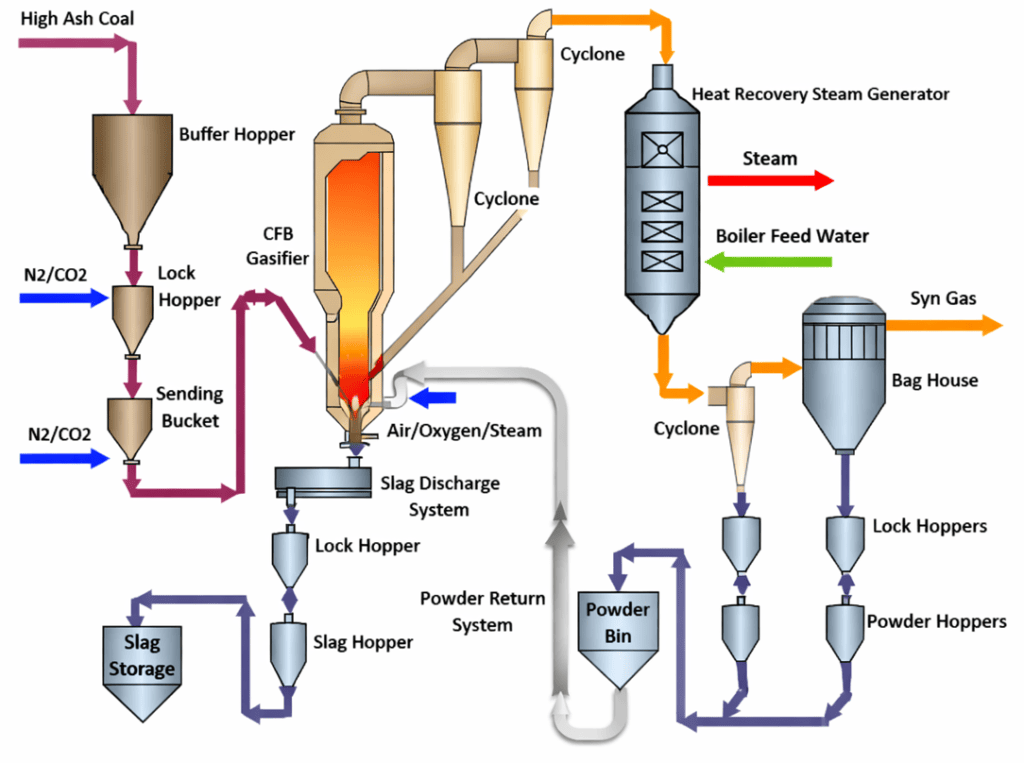
CFB gasification design using waste heat recovery process, which can recover the heat from syngas to produce high temperature and high-pressure steam along with oxygen preheating resulting in overall optimum thermal efficiency.
The fluidized bed design results in long residence times of the reacting particles and the fines have a two-stage recycle back process with all returning to gasifier. This helps achieve the overall carbon conversions > 98% which is among the highest in the world.
CFB TECHNOLOGY FEATURES

ECONOMICS – SAVINGS BENEFITS
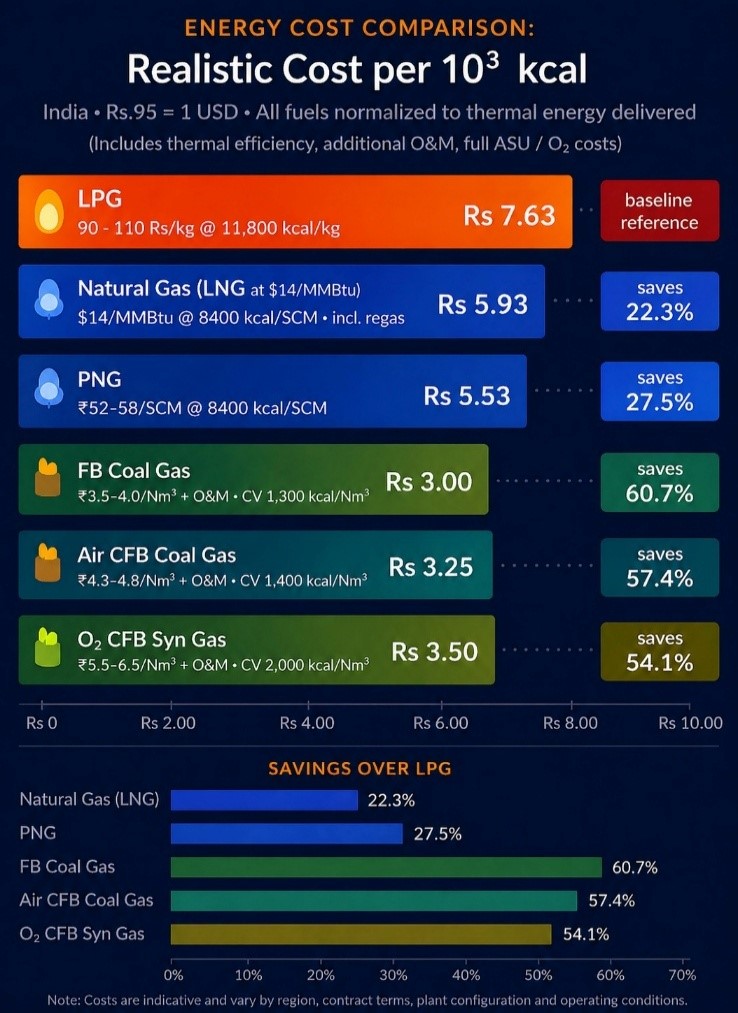
The key to adaption of COAL GASIFICATION is the acceptance of the Economic Benefits of using Indian Coal vs expensive fuels. We have developed a comparative of cost of 10,000 Kcal energy from all difference fuels as per current prices. From the table, it is clear that the real benefits are saving of more than 50% of fuel expenses.
A futuristic idea is also an integration of the coal gasification system combining Fixed Bed (FB) and Air-blown Circulating Fluidized Bed (CFB) technologies provides an efficient solution for industrial fuel generation. Lump coal is processed in the fixed bed gasifier to produce relatively clean, moderate-calorific-value syngas, while coal sizzing < 15 mm as rejects are utilized in the CFB gasifier, ensuring complete fuel utilization. Both units generate FUEL GAS primarily composed of CO, H₂, and CH₄, which is routed to a central gas network for uniform distribution across plant applications.
The use of air-blown gasification eliminates the need for an oxygen plant, significantly reducing capital and operating costs. This hybrid configuration enhances fuel flexibility, improves overall efficiency, and optimizes resource utilization. The produced FUEL GAS can effectively replace conventional fuels such as LPG, PNG, and Furnace oil in various industrial heating processes. Typical applications include steel reheating, stainless steel production, ceramics manufacturing, alumina calcination, and cement kilns.
CONCLUSION
Crude Oil derivatives and Natural gas are increasingly becoming expensive fuel options for the industry and with prices often fluctuating due to geopolitical factors and supply chain remaining uncertain, making them as the backbone of the industry is now making the complete plant dependent on unreliable energy sources.
In contrast, COAL GASIFICATION offers a stable and cost-effective alternative by converting abundant Indian coal reserves into cleaner gaseous fuel, ensuring consistent supply and economic viability.
Backed by strong expertise and operational experience, Dev Energy delivers dependable coal gasification solutions that are both affordable and efficient, positioning it as a reliable partner for sustainable energy needs. These are not claims but experience form > 250 proven commercial scale plants operating providing a ready solution in from of basic engineering, detailed engineering, and EPC solutions.
